
TL;DR — Quick Summary
Not all “mutant cannabis” is the same.
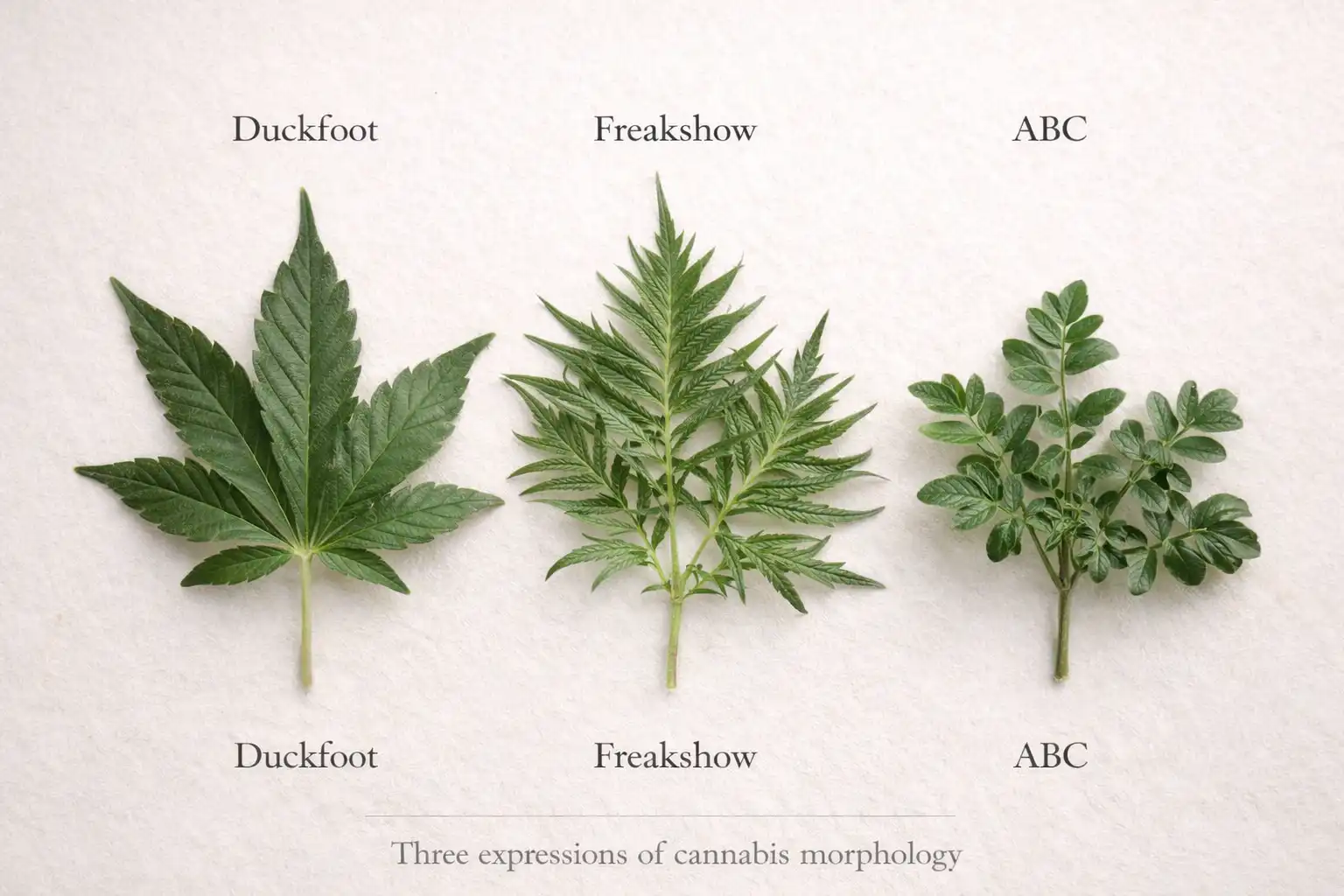
Duckfoot is a webbed-leaf trait used in breeding, Freakshow is a stabilised fern-leaf cannabis that still grows and flowers normally, and Australian Bastard Cannabis (ABC) is an extreme, unstable outlier. Freakshow is the most practical and accessible, Duckfoot is subtle and breeder-friendly, and ABC exists mainly as a genetic curiosity.
If you’ve ever seen a Freakshow plant and thought “that can’t be cannabis”, you’re not alone.
Some genetics push cannabis so far away from its familiar leaf shape that even experienced growers have to stop and take a second look. Fern-like fronds. Webbed leaves. Plants that resemble shrubs more than anything you’d expect to flower.
Freakshow, Duckfoot and Australian Bastard Cannabis (ABC) all live in this strange corner of cannabis genetics — but they’re often lumped together despite being very different in origin, stability, and real-world usefulness.
Once you understand why these plants exist, how they actually grow, and what separates novelty from true mutation, most of the confusion around “mutant cannabis” disappears.
What People Mean by “Mutant Cannabis” (and Why It Gets Confusing)
The term mutation gets thrown around loosely in cannabis culture, and that’s where most misunderstandings start.
In practice, there are two very different situations being described:
- Selectively bred traits — unusual leaf shapes that breeders noticed, selected, and stabilised over generations
- True morphological outliers — rare genetic expressions that push cannabis so far from its usual form that stability becomes a real problem
Freakshow and Duckfoot sit closer to the first group.
ABC sits firmly in the second.
That distinction matters, because it explains why some of these plants are relatively easy to grow — and others remain obscure curiosities.
Freakshow Cannabis
Extreme Leaf Morphology Without Breaking the Plant
Freakshow didn’t appear by chance. It exists because a breeder deliberately asked a question most people never bother with: what happens if we stop selecting for the classic cannabis leaf altogether?
The genetics are most often traced back to breeder Shapeshifter, with later distribution through the California seed scene. The goal wasn’t to chase THC or yield — it was to create a cannabis plant that looked completely unfamiliar, while still behaving like cannabis in every way that matters.
That balance is what makes Freakshow special.
Why Freakshow Leaves Look So Strange
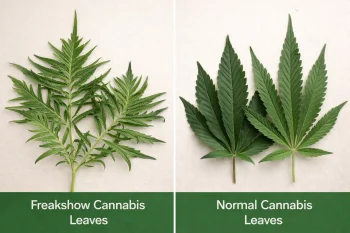
Freakshow’s defining feature is its fern-like, fronded leaf structure. The leaves lack the sharp serrations that normally make cannabis instantly recognisable. Instead, they form irregular, deeply divided shapes that wouldn’t look out of place on an ornamental plant.
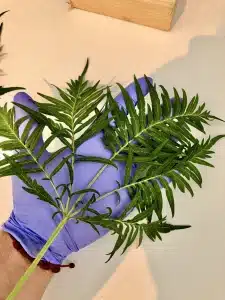
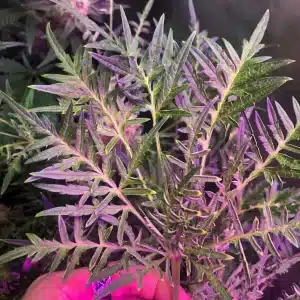
What’s important is that this isn’t a temporary quirk.
Many odd leaf expressions show up early, then disappear as the plant matures. Freakshow doesn’t do that. The morphology holds from vegetative growth all the way through flowering.
Flowering Time and Growth Behaviour
One of the biggest surprises for first-time Freakshow growers is how normal the plant feels once flowering begins.
In real-world grows:
- flowering timelines are broadly comparable to conventional photoperiod strains
- branch structure and internode spacing remain familiar
- bud sites form where you’d expect them
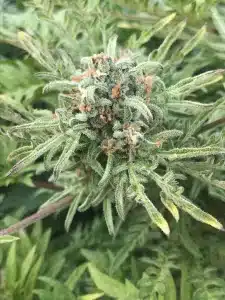
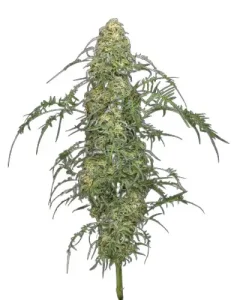
Visually, the contrast becomes more dramatic, not less — strange, alien leaves framing very normal cannabis flowers.


Bud Structure, Trim and Yield Expectations
Despite the unusual foliage, Freakshow buds are not mutated.
They:
- form standard calyx and pistil structures
- stack in recognisable patterns
- trim much like any other plant
Yield is best described as moderate. Freakshow isn’t a production monster, but the mutation doesn’t automatically cripple output either. Most growers find yield is influenced far more by environment and overall genetics than by leaf shape.
Potency Reality Check
Freakshow isn’t interesting because it’s exceptionally strong.
Across breeder notes and grower reports, cannabinoid levels tend to land in the respectable range rather than the extreme end of the spectrum. The mutation affects appearance, not chemistry.
People grow Freakshow because it’s genuinely different — not because it replaces their favourite high-THC strain.
👉 Internal reference:
Freakshow feminized cannabis seeds
Duckfoot Cannabis
A Webbed-Leaf Trait Used by Breeders
Duckfoot is often misunderstood because it’s talked about like a single strain. It isn’t.
“Duckfoot” describes a webbed leaf trait, where the fingers of the cannabis leaf don’t fully separate. The result is a broad, paddle-like shape that can look surprisingly generic from a distance.
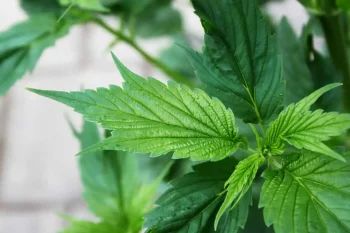
It’s a trait, not a mutation in the dramatic sense — and that’s exactly why breeders like it.
Why Duckfoot Keeps Appearing in Hybrids
Duckfoot traits are useful because they introduce novelty without destabilising the plant.
In most cases:
- flowering time is unchanged
- structure remains conventional
- yield tracks with the dominant parent genetics
Expression can be subtle and sometimes fades later in growth, which is why growers often debate whether a plant “really is” Duckfoot at all. From a breeding perspective, that subtlety is a feature, not a flaw.
Duckfoot in Practice: Dutch Passion Examples
Frisian Duck (Ducksfoot × Frisian Dew)
Frisian Duck combines Ducksfoot leaf morphology with the outdoor resilience and vigour of Frisian Dew. The Ducksfoot influence is mainly cosmetic, while the Frisian Dew genetics anchor growth behaviour and performance.
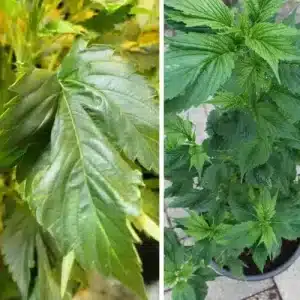
👉 Frisian Duck (Ducksfoot × Frisian Dew)
Auto Duck (Frisian Duck × Auto White Widow)
Auto Duck extends the Ducksfoot concept into autoflowering genetics by introducing Auto White Widow. The result is approachable, predictable, and far from extreme.
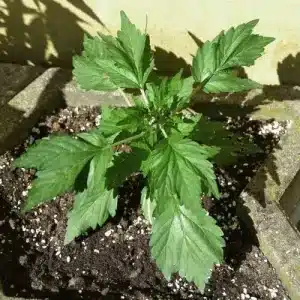
👉 Auto Duck (Frisian Duck × Auto White Widow)
Buds, Yield and Grow Experience
Duckfoot plants flower like normal cannabis plants. Buds look normal. Trimming feels normal. Yield depends on the underlying genetics, not the leaf shape.
For most growers, Duckfoot is something you enjoy noticing — not something you have to work around.
Australian Bastard Cannabis (ABC)
The Outer Limits of Cannabis Morphology
ABC sits in a completely different category.
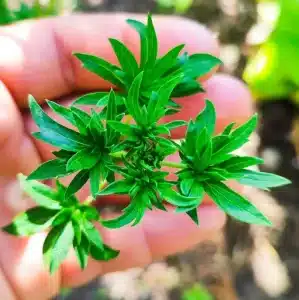
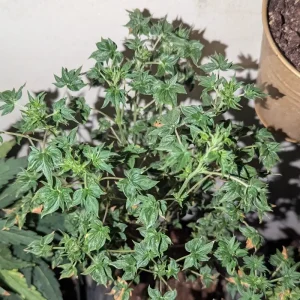
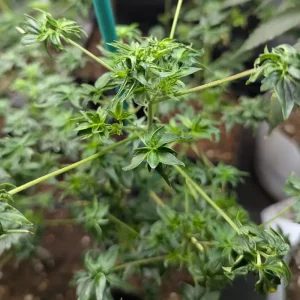
These plants often don’t look like cannabis at all. Leaves are smooth-edged, rigid, and shrub-like — closer to basil or tomato plants than anything associated with cannabis culture.
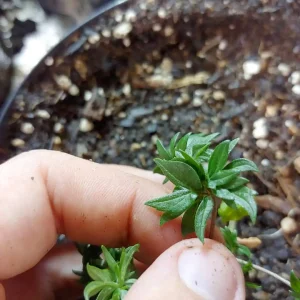
Flowering Behaviour and Why ABC Stays Rare
ABC diverges most clearly during flowering.
Bud formation tends to be:
- smaller and less consolidated
- spread across the plant rather than forming strong colas
- inconsistent from one plant to the next
Yield is often low, and stabilising the genetics across generations is difficult. This is why reliable commercial ABC lines are rare and mislabelled seeds are common.
ABC survives because it’s fascinating, not because it’s practical.
Freakshow vs Duckfoot vs ABC — Side-by-Side
[INSERT IMAGE: Three-way comparison graphic — Duckfoot vs Freakshow vs ABC leaves]
| Feature | Duckfoot | Freakshow | ABC |
|---|---|---|---|
| Visual deviation | Mild | High | Extreme |
| Leaf consistency | Partial | Full lifecycle | Full lifecycle |
| Flower structure | Normal | Normal | Often irregular |
| Yield | Normal | Moderate | Low |
| Best suited for | Subtle novelty | Enthusiasts & collectors | Genetic curiosity |
Why Grow Mutant Cannabis at All?
Nobody grows Freakshow, Duckfoot or ABC because it’s the most efficient way to fill jars.
They grow them because:
- they’re bored of the same visual language
- they enjoy experimentation
- they’re curious about cannabis as a plant, not just a product
In a market dominated by THC numbers and recycled names, these genetics remind people why cannabis was interesting in the first place.
Frequently Asked Questions About Mutant Cannabis
Is Freakshow cannabis a real strain or just a novelty?
Freakshow is a real, stabilised cannabis genetic created through selective breeding. While its appeal is visual, it grows and flowers in a recognisably normal way.
Is Duckfoot the same as Freakshow?
No. Duckfoot is a webbed-leaf trait used in breeding, while Freakshow expresses a much more extreme fern-like morphology that persists throughout the plant’s lifecycle.
Does mutant cannabis have higher THC?
No. Leaf mutations don’t increase THC. Potency is determined by cannabinoid genetics, not leaf shape.
Why is Australian Bastard Cannabis so rare?
ABC is difficult to stabilise, produces inconsistent results, and often yields poorly. It exists mainly as a genetic curiosity rather than a commercial cultivar.
Do Freakshow buds look normal?
Yes. Despite its unusual leaves, Freakshow produces recognisably normal cannabis flowers.
Are Duckfoot strains harder to grow?
No. Duckfoot traits generally don’t affect flowering time, yield or difficulty.
The Straight Answer
Duckfoot bends expectations.
Freakshow rewrites the visual rulebook without breaking the plant.
ABC ignores the rulebook entirely.
If you’re choosing one, Freakshow offers the best balance of novelty, stability and practicality. Duckfoot is subtle and breeder-friendly. ABC is for people who want to explore the outer edges of cannabis genetics — even when the result isn’t especially usable.