
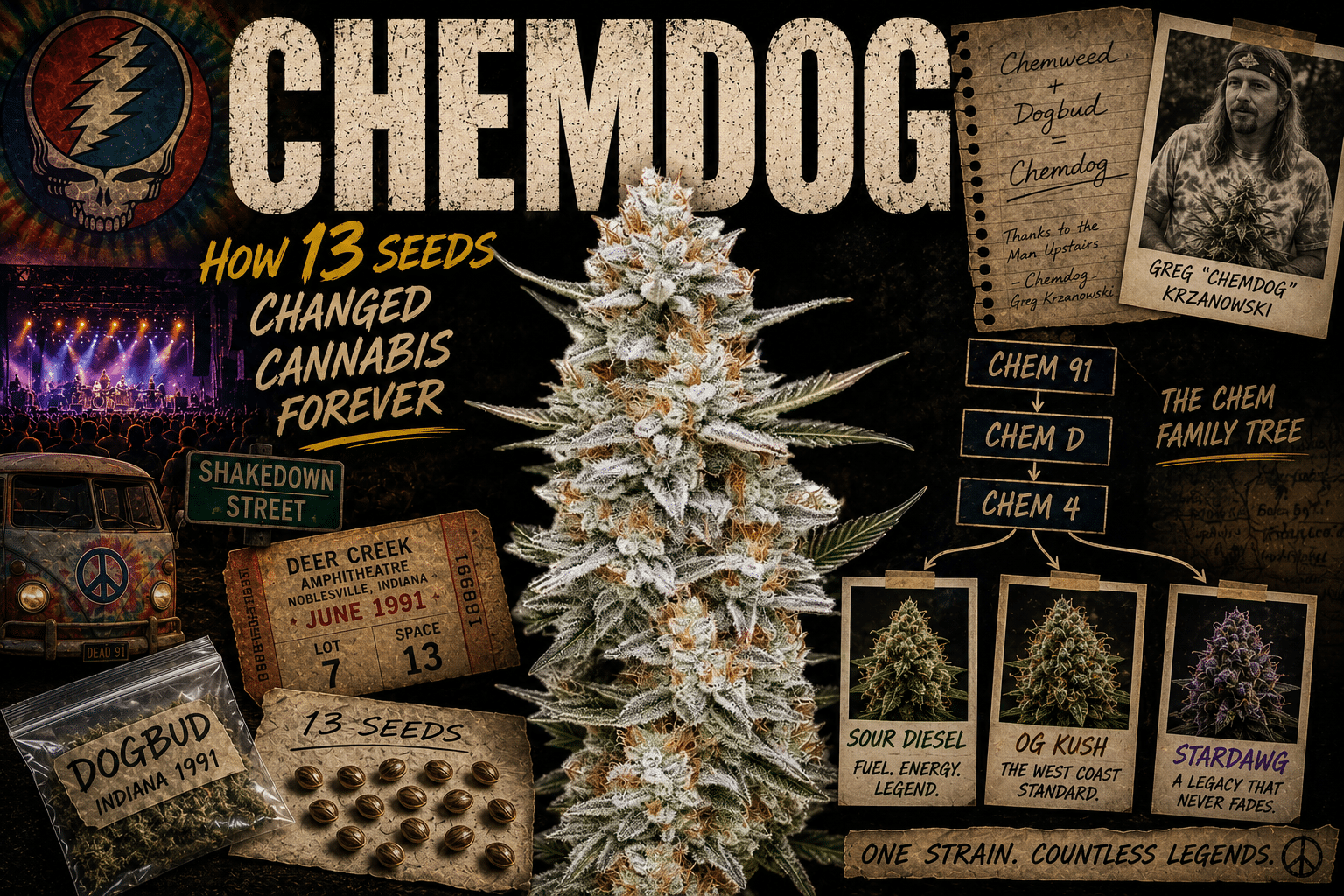
What a long, strange trip it’s been. From a Grateful Dead parking lot in 1991 to the genetic foundation of Sour Diesel, OG Kush and Stardawg, the story of Chemdog is one of the most important—and improbable—stories in cannabis history.
The Strain That Changed Everything
Most cannabis strains enjoy a moment in the spotlight before fading into obscurity.
Chemdog did something different.
It became a foundation.
More than thirty years after its discovery, growers still hunt for original Chem cuts. Breeders still use Chem genetics as building blocks. Enthusiasts still debate the origins of the strain with almost religious enthusiasm.
And for good reason.
Without Chemdog, there is a very real chance there would be no Sour Diesel as we know it. No OG Kush. No Stardawg. No sprawling family tree of fuel-soaked, resin-dripping cultivars that dominate dispensaries and seed catalogues today.
To understand modern cannabis, you first need to understand Chemdog.
And to understand Chemdog, you need to go back to a parking lot in Indiana.
June 1991: Shakedown Street

The legendary Chemdog story begins at Deer Creek Amphitheatre in Indiana during the Grateful Dead’s 1991 summer tour.
The Grateful Dead roll into Deer Creek Amphitheatre in Indiana for a two-night run.
Outside the venue, Shakedown Street is alive.
Music pours from battered speakers. Vendors sell tie-dye shirts and handmade jewellery. Travellers drift between stalls. Growers, smokers and Deadheads trade stories, smoke and whatever else they happen to be carrying.
Nobody knows it yet, but one of the most important moments in cannabis history is about to happen.
Among the crowd is an eighteen-year-old cannabis enthusiast from Massachusetts named Greg Krzanowski.
The cannabis world would later know him by a different name.
Chemdog.
While wandering through the lot, Greg meets two fellow Deadheads known as Joe Brand and P-Bud.
They have something special.
A strain called Dogbud.
Greg buys an ounce for around $500.
That wasn’t pocket change in 1991.
But almost immediately he realises this isn’t ordinary cannabis.
The aroma is different.
The potency is different.
The resin production is unlike anything he’s encountered before.
Most importantly, the flower carries a pungent fuel-heavy scent that stands apart from the earthy, floral and skunky cannabis commonly circulating at the time.
This wasn’t just good weed.
This was memorable weed.
The sort of flower people talk about years later.
The sort of flower that starts legends.
Dogbud, Chemweed and a Name That Stuck
The flower already had a reputation among those lucky enough to encounter it.
Some people called it Dogbud.
Others called it Chemweed.
The nickname came from the unusual aroma—a pungent chemical, fuel-like scent that was unlike almost anything else available in the early 1990s.
Years later, P-Bud would explain that both names circulated among the small circle familiar with the flower.
Eventually, Greg merged them.
Chem.
Dog.
Chemdog.
Today, the name is recognised worldwide.
Ironically, it originally belonged to Greg himself.
The strain simply inherited it.
Over the years, alternative spellings emerged, including Chemdawg, but the original name remains Chemdog—a combination of Chemweed and Dogbud.
The Most Valuable Bag Seeds in Cannabis History
Most legendary cannabis strains begin with a deliberate breeding project.
Chemdog began with an accident.
After returning home to Massachusetts, Greg stayed in touch with Joe Brand and arranged for more Dogbud to be shipped from Colorado.
Weeks later, two ounces arrived.
One bag was exactly what he expected.
The other contained something far more important.
Tucked inside the flowers were thirteen small cannabis seeds.
No breeder notes.
No labels.
No lineage information.
No indication whatsoever that cannabis history was sitting at the bottom of the bag.
Just thirteen seeds.
Looking back, they may be the most valuable bag seeds ever discovered.
Without them, there may never have been Sour Diesel, OG Kush, Stardawg or many of the fuel-heavy cultivars that define modern cannabis.
The 13 Seeds That Changed Cannabis Forever
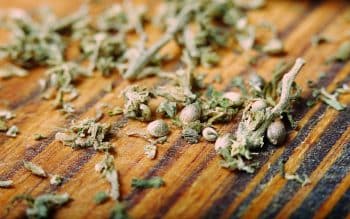
The original thirteen seeds would eventually produce Chem 91, Chem D, Chem 4 and some of the most influential cannabis genetics ever preserved.
In 1991, Greg germinated the first four seeds.
One turned out to be male and was discarded.
The remaining three females were kept and labelled simply:
- Chemdog
- Chemdog A
- Chemdog B
No one was thinking about cannabis history.
No one was imagining future Cannabis Cups.
No one was predicting that entire breeding programmes would eventually be built around these genetics.
They were simply preserving exceptional plants.
The original Chemdog female would later become known as Chem 91.
Chemdog A became Chem’s Sister.
Chemdog B remained part of the original collection but never achieved the same legendary status.
Years later, more seeds from the original stash would produce additional phenotypes, including Chem D and the famous Chem 4, sometimes referred to as the Reunion Pheno.
At the time, however, they were simply outstanding plants.
The significance would only become apparent years later.
The Great Mystery at the Heart of Chemdog
One reason the strain remains so fascinating is that nobody knows exactly where it came from.
We know where the seeds were found.
We know who grew them.
We know how they spread.
But the true origins of Dogbud remain one of cannabis culture’s greatest mysteries.
Some accounts suggest the flower originated somewhere near the California-Oregon border.
Others point toward Northern California.
Some enthusiasts speculate about Thai, Nepalese or early Skunk influences hidden deep within the genetics.
The truth is that nobody can say for certain.
No verified lineage exists.
No breeder records have ever surfaced.
More than thirty years later, the mystery remains unsolved.
In an era where every new hybrid arrives with a detailed family tree and marketing campaign, there’s something refreshing about a genuine mystery.
Perhaps that’s part of the appeal.
Perhaps some legends are better left partially unexplained.
Why Chemdog Was So Different
To understand why growers became obsessed with Chemdog, you have to remember what cannabis looked like in the early 1990s.
Today’s growers have access to thousands of strains.
Back then, truly elite genetics were rare.
Most cannabis consumers had never encountered a plant that combined:
- Extreme potency
- Heavy trichome production
- Long-lasting effects
- Pungent fuel aromas
- Exceptional breeding potential
Chemdog delivered all of those traits at once.
Most cannabis of the era smelled earthy, floral or skunky.
Chemdog smelled like fuel.
People remembered it instantly.
Today we talk about “gas” strains as though they’ve always existed.
In reality, much of that category traces back to the Chem family.
The modern obsession with diesel terpenes, fuel aromas and pungent chemical notes owes a significant debt to Chemdog.
The Rise of Chem 91
Of all the original selections, one quickly emerged as the standout.
Chem 91.
The clone developed an almost mythical reputation among growers fortunate enough to encounter it.
Before long, cultivators were chasing cuts of Chem 91 the way collectors chase rare baseball cards.
Growers prized the resin production.
Smokers loved the potency.
Breeders recognised something even more valuable.
Genetic potential.
As clones spread through underground grow circles across America, Chem 91 became one of the most sought-after cuts in cannabis history.
Many collectors still consider it one of the most important clone-only cultivars ever preserved.
More importantly, Chem 91 would become the foundation of an entire dynasty.
The First Sparks of a Dynasty
By the mid-1990s, Chem 91 had escaped the parking lot where the story began.
The clone travelled through underground grow circles, breeder networks and cannabis communities throughout the United States.
Word spread.
The legend grew.
And soon, those thirteen mysterious seeds would begin producing something even more important than elite flower.
They would begin producing descendants.
Some of the most famous descendants cannabis has ever known.
- Sour Diesel
- OG Kush
- Chem D
- Chem 4
- Tres Dawg
- Stardawg
By the end of the decade, the influence of those thirteen seeds would be impossible to ignore.
Part 1 Conclusion
Most legendary cannabis strains become popular.
Very few become foundational.
Chemdog did both.
What began as a chance purchase in a Grateful Dead parking lot evolved into one of the most influential genetic lines ever discovered.
The story started with Dogbud.
It continued with thirteen mysterious seeds.
And before long, it would help shape the future of cannabis itself.
But the real story is only just beginning.
In Part 2, we’ll follow the spread of Chem genetics across America, the rise of Chem D and Chem 4, the creation of Sour Diesel, the enduring mystery of OG Kush, and the birth of a cannabis dynasty that still influences breeding programmes more than three decades later.
The Chem Family Expands
By the mid-1990s, Chem 91 had become one of the most coveted clone-only cultivars in the underground cannabis scene.
The original Grateful Dead parking lot purchase had evolved into something much larger.
Growers were sharing cuts.
Breeders were making crosses.
Collectors were searching for anything carrying the Chem name.
Most importantly, the genetics were beginning to spread beyond Massachusetts.
What happened next would help create the modern cannabis landscape.
A Phish Concert, A Clone Exchange and the Road to New York
Like many chapters in the Chemdog story, the next major development happened around live music.
In the early 1990s, Greg met a grower known simply as Weasel at a Phish concert.
The two quickly realised they were both carrying exceptional genetics.
As often happened in underground cannabis circles, clones were exchanged.
Chem 91 travelled with Weasel back to New York.
At the time, nobody realised this simple trade would eventually help create one of the most famous cannabis strains ever released.
But that is exactly what happened.
As Chem 91 spread through New York grow circles, its reputation exploded.
The fuel-heavy aroma stood out immediately.
Its potency stood out even more.
Growers recognised that they weren’t dealing with just another clone.
They were dealing with something special.
The Birth of Sour Diesel
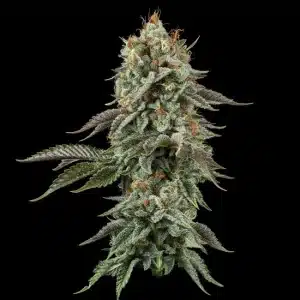
The influence of Chemdog can be seen throughout modern cannabis, particularly in legendary strains such as Sour Diesel and OG Kush.
If Chemdog is the father of modern fuel strains, then Sour Diesel is arguably its most famous child.
Like many legendary cannabis varieties, Sour Diesel wasn’t created through a carefully documented breeding project.
It emerged from a fortunate accident.
During the mid-1990s, Chem 91 was being cultivated alongside several other elite cuts in New York.
At some point, pollen found its way where it wasn’t supposed to.
The exact details remain debated to this day.
Some accounts suggest Chem 91 was pollinated by a plant known as DNL (Northern Lights crossed with Hawaiian genetics).
Others point toward Mass Super Skunk playing a role.
As with many cannabis origin stories, the details become murkier the deeper you dig.
What isn’t disputed is the outcome.
The resulting offspring produced a plant unlike anything people had encountered before.
It retained the fuel-heavy backbone of Chem 91 while adding an aggressive sour edge that would eventually define an entire category of cannabis.
The strain became known as Diesel.
Later, it became known as Sour Diesel.
And before long, it was commanding prices previously unheard of in the cannabis world.
Throughout the late 1990s and early 2000s, genuine East Coast Sour Diesel became one of the most sought-after cannabis varieties in America.
Wall Street traders, musicians, artists and connoisseurs all wanted the same thing.
The Sour.
For many people, Sour Diesel was their first introduction to the power of Chem genetics.
The OG Kush Mystery
If the origins of Sour Diesel are debated, the origins of OG Kush are even more controversial.
Few cannabis topics generate more arguments among enthusiasts than the true history of OG Kush.
Yet one theory consistently appears throughout the story.
Chemdog.
According to one widely accepted account, a seeded batch of Chem 91 eventually found its way to the West Coast.
One of those seeds was grown in the Lake Tahoe region during the mid-1990s.
The resulting plant would eventually become known as OG Kush.
Can it be proven?
Not completely.
Is it possible?
Absolutely.
The similarities between early OG Kush and Chem 91 have long fuelled speculation among breeders.
Both share unmistakable fuel-heavy aromas.
Both produce exceptional resin.
Both became foundational breeding tools.
And both changed cannabis forever.
Whether OG Kush is a direct descendant of Chem 91 or merely a close relative may never be conclusively proven.
What matters is that the Chem influence appears impossible to ignore.
Back to the Original Seeds
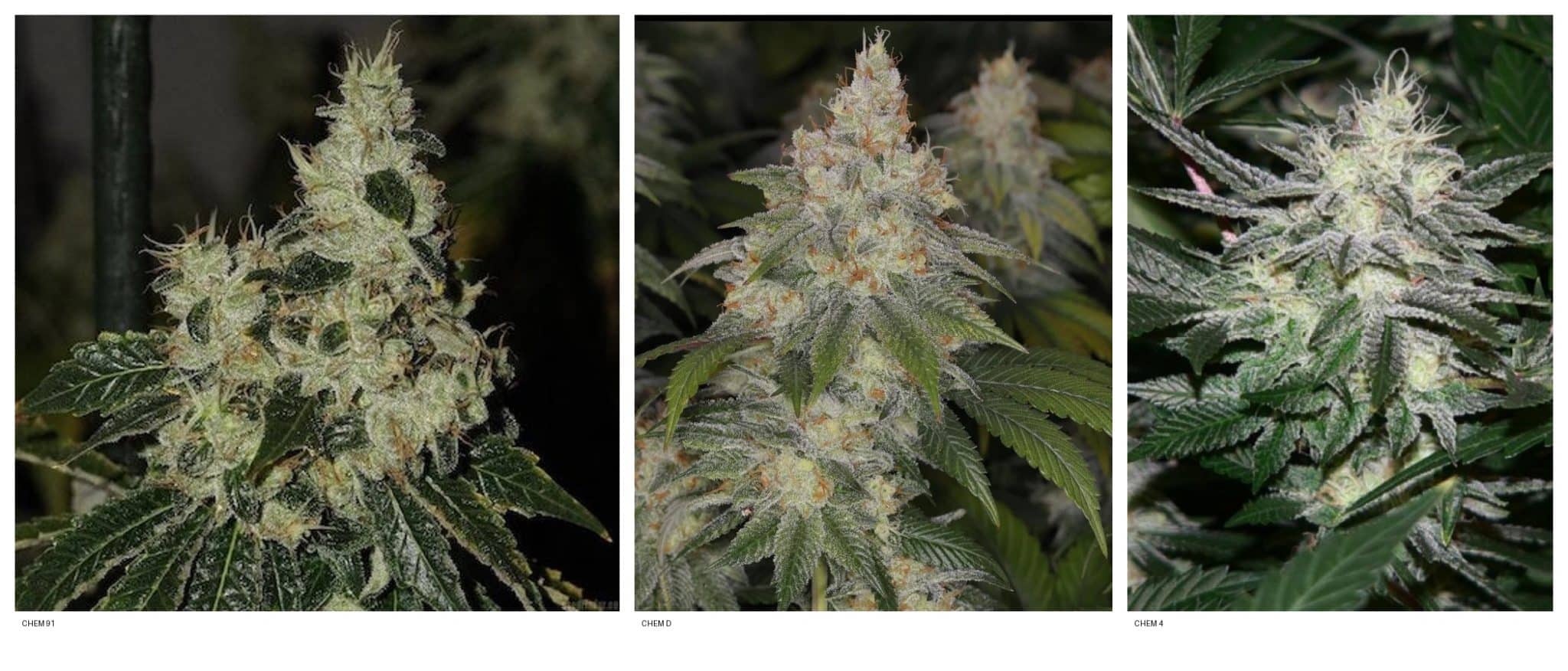
Many collectors consider Chem 91, Chem D and Chem 4 among the most important clone-only cultivars in cannabis history.
While Sour Diesel and OG Kush were making headlines, Greg still had unfinished business.
The original stash of thirteen seeds had not yet revealed all of its secrets.
In 2001, additional seeds from the original collection were germinated.
These became known simply as:
- Chem C
- Chem D
- Chem E
Not every phenotype lived up to expectations.
One failed to germinate.
Another was reportedly unimpressive.
But one stood above the rest.
Chem D.
Among Chem enthusiasts, Chem D quickly developed an almost mythical reputation.
Some growers considered it even stronger than Chem 91.
Others preferred its aroma, structure and resin production.
Regardless of personal preference, Chem D cemented itself as one of the most important cuts ever preserved.
More than thirty years after those original seeds were discovered, Chem D remains a benchmark for fuel-forward cannabis.
The Reunion Pheno: Chem 4
The story didn’t end there.
In 2006, Greg reunited with Joe Brand, the same individual who had unknowingly sold him the original Dogbud fifteen years earlier.
The reunion felt almost surreal.
A cannabis legend had been born from their chance encounter, and neither could have predicted what followed.
As part of the reunion, several remaining seeds from the original collection were shared and germinated.
Four phenotypes emerged.
The fourth phenotype stood out.
Joe believed it most closely resembled the original Dogbud he remembered from 1991.
Because of that, it earned a nickname that still follows it today.
The Reunion Pheno.
Most growers simply know it as Chem 4.
Today, Chem 4 remains one of the most respected expressions of the Chem family and has been used extensively in breeding projects throughout North America.
The Birth of a Cannabis Dynasty
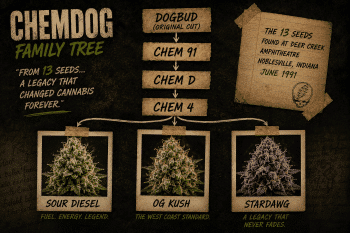
Few cannabis strains have produced a family tree as influential as the Chem lineage.
By the late 2000s, the scale of Chemdog’s influence was becoming impossible to ignore.
This was no longer simply a famous strain.
It was a dynasty.
From a handful of mystery seeds emerged:
- Chem 91
- Chem’s Sister
- Chem D
- Chem 4
- Sour Diesel
- OG Kush
- Tres Dawg
- Stardawg
And that list only scratches the surface.
Countless modern hybrids contain Chem influence somewhere in their family tree.
The fuel-heavy terpene profiles that dominate today’s cannabis market owe a substantial debt to these genetics.
The rise of Diesel cultivars.
The rise of OG cultivars.
The obsession with gas, fuel, kerosene and chemical aromas.
Much of it can be traced back to one ounce of cannabis purchased at a Grateful Dead concert in 1991.
Part 2 Conclusion
Most cannabis strains leave behind descendants.
Few create entire bloodlines.
By the time Chem 91, Chem D and Chem 4 had spread across America, the foundation of modern cannabis had already been laid.
The next chapter of the story isn’t about individual cuts.
It’s about influence.
Because the true legacy of Chemdog isn’t Chem 91.
It isn’t Chem D.
It isn’t even Sour Diesel or OG Kush.
The true legacy of Chemdog is how it fundamentally changed cannabis breeding forever.
In Part 3, we’ll explore the terpene profile, effects, cultivation traits and lasting influence of Chemdog, and examine why breeders still chase Chem genetics more than three decades after those thirteen famous seeds were discovered.
How Chemdog Changed Cannabis Forever
By this point in the story, Chemdog had already achieved something few cannabis strains ever manage.
It had survived.
The original cuts had been preserved. The genetics had spread across America. Descendants such as Sour Diesel and OG Kush were becoming legends in their own right.
For many strains, that would have been enough.
But Chemdog’s greatest contribution to cannabis wasn’t a single clone or a famous offspring.
It was an entirely new flavour profile.
An entirely new category.
A new standard by which cannabis would be judged.
The Birth of “Gas”
Today, terms like gas, diesel, fuel and chem are everywhere.
Dispensaries use them.
Breeders market them.
Growers chase them.
Consumers actively seek them out.
But in the early 1990s, those aromas were relatively uncommon.
Most cannabis carried earthy, floral, herbal or skunky notes.
Chemdog smelled different.
Open a jar of authentic Chem and the aroma announced itself immediately.
Fuel.
Diesel.
Kerosene.
Earth.
Chemicals.
Something aggressive.
Something almost industrial.
It wasn’t subtle.
And that’s exactly why people loved it.
Today, entire categories of cannabis owe their existence to those original Chem terpenes.
The modern obsession with fuel-heavy cannabis can be traced directly back to the Chem family.
The Terpenes Behind the Legend
Modern laboratory testing has helped explain why Chemdog produces such a distinctive sensory experience.
While individual phenotypes vary, several terpenes appear repeatedly throughout Chem expressions.
β-Myrcene
Myrcene contributes earthy, musky and herbal characteristics while helping create the deeply relaxing body effects often associated with mature Chem cuts.
Limonene
Limonene introduces citrus brightness and is often credited with contributing to the uplifting, mood-enhancing aspects of the experience.
Caryophyllene
Caryophyllene brings spice, pepper and earth while adding depth to the famous fuel profile.
Together, these terpenes create a profile that remains instantly recognisable more than three decades after the strain first appeared.
Many breeders have tried to recreate it.
Few have matched it.
The Effects That Built a Reputation
Plenty of strains smell good.
Far fewer live up to the aroma.
Chemdog earned its reputation because it delivered both.
Early users frequently described a fast-acting cerebral onset followed by deep physical relaxation.
The experience often begins with:
- Euphoria
- Mental stimulation
- Enhanced creativity
- Elevated mood
- Increased sociability
As the experience develops, the body begins to catch up.
Muscles relax.
Tension fades.
The initial cerebral intensity gradually gives way to physical comfort.
This balance helped make Chemdog appealing to an unusually broad audience.
Artists appreciated the creativity.
Musicians appreciated the inspiration.
Recreational users appreciated the potency.
Breeders appreciated the genetics.
Everyone seemed to appreciate the aroma.
Why Breeders Still Chase Chem Genetics
Cannabis breeding trends come and go.
Cookie varieties dominate one decade.
Dessert strains dominate another.
Exotic candy profiles rise and fall.
Yet throughout all these changes, Chem genetics continue to appear.
There’s a reason for that.
Breeders value traits that consistently pass to offspring.
Chemdog offers several of the most desirable:
- Heavy resin production
- Exceptional potency
- Strong terpene expression
- Distinctive fuel aromas
- Excellent breeding value
When breeders want to add gas, potency and resin to a project, Chem remains one of the first places they look.
That was true in the 1990s.
It’s still true today.
From Chemdog to Stardawg
One of the clearest examples of Chemdog’s continuing influence is Stardawg.
Created through work involving Chem 4 and Tres Dawg, Stardawg became one of the defining fuel-heavy cultivars of the modern era.
Its unmistakable diesel aroma, powerful effects and breeding value helped establish it as a modern classic.
Many newer cultivars carrying “gas” profiles owe as much to Stardawg as they do to Chemdog itself.
In many ways, Stardawg represents the next chapter of the Chem story.
A modern expression of the same traits that first captivated Greg Krzanowski back in 1991.
The Modern Cannabis Family Tree
Look closely at enough strain pedigrees and something interesting happens.
The same names keep appearing.
Chemdog.
Sour Diesel.
OG Kush.
Stardawg.
Again.
And again.
And again.
The influence of the Chem family stretches far beyond its direct descendants.
Modern breeders routinely use Chem-based genetics to improve:
- Resin production
- Potency
- Terpene complexity
- Commercial appeal
- Extraction performance
Even cultivars that appear completely unrelated often contain Chem ancestry somewhere deep within their family tree.
The further you trace modern cannabis genetics backwards, the more often Chemdog appears.
The Power of the Dog
Few strains have aged as gracefully as Chemdog.
Many legendary cultivars become nostalgic curiosities.
Important historically.
Less impressive by modern standards.
Chemdog is different.
Even today, authentic Chem cuts remain capable of competing with contemporary genetics.
The aroma still stands out.
The resin still impresses.
The effects still deliver.
And perhaps most importantly, breeders still want access to the genetics.
That alone says everything.
Final Thoughts: The Most Influential Strain You’ve Never Fully Appreciated
Most cannabis enthusiasts know the names.
What many don’t realise is that all roads eventually lead back to the same place.
A Grateful Dead concert.
A bag of Dogbud.
And thirteen mysterious seeds.
The story of Chemdog isn’t simply the story of a cannabis strain.
It’s the story of how modern cannabis was built.
Without Chemdog, the cannabis world we know today would look very different.
Different flavours.
Different genetics.
Different legends.
Few cultivars can claim that level of influence.
Chemdog can.
More than thirty years later, the Dog still runs the yard.
Related Strain Reviews
❓ Chemdog Strain FAQs
Is Chemdog the same as Chemdawg?
Where did the original Chemdog strain come from?
Who created Chemdog?
What are the 13 Chemdog seeds?
What is Chem 91?
What is the difference between Chem 91, Chem D and Chem 4?
Is Sour Diesel descended from Chemdog?
Is OG Kush descended from Chemdog?
Why is Chemdog considered so important?
Why is Chemdog called the grandfather of modern cannabis?
What does “gas” mean in cannabis?
What terpenes are commonly found in Chemdog?
Are Chemdog and GMO related?
Can I buy Chemdog seeds today?
Explore Chemdog Genetics
Interested in experiencing the Chem family for yourself? Explore modern Chemdog descendants, fuel-heavy cultivars and classic Diesel genetics available at StrainSupermarket.
- Flavour Gang Chemdawg Seeds
- Green House Chemdog Seeds
- Flavour Gang Stardawg Seeds
- Chem4 OG Seeds
- SFV OG Kush Seeds
By Mary, Senior Editorial Research Writer | Reviewed by the StrainSupermarket editorial team | Last updated June 2026
About the author: Mary is a Senior Editorial Research Writer at StrainSupermarket, covering cannabis genetics, seed types, breeding trends, and evidence-based educational content for growers and seed buyers.
Legal note: Cannabis laws vary by jurisdiction. This guide is for educational purposes only, and readers should always comply with local laws.